Posts

THE ARCHIVIST

Image
On "THE ARCHIVIST"  °Being yourself and not a Mimicker.° {Edition 1: Volume 1}

LENTEN MESSAGE DAY 10

Image
«Love your enemies, and pray for those who persecute you» T oday's Gospel exhorts us to the most perfect love. Love is wanting to do good to others, and here lies our personal fulfillment. We do not love for our own sake, but for the sake of doing good to our neighbor, and on doing it to improve as persons. The II Vatican Council said, «human beings cannot reach their prime but by sincerely giving themselves to others». Sainte Therese of the Infant Jesus said, ‘This is making an holocaust of our life’. Love is a human vocation. Our whole behavior, to be truly human, has to be the expression of the reality of our being while fulfilling our vocation for love. As John Paul II has written, «a man, cannot live without love. He becomes incomprehensible. His life does not make sense if love is not revealed to him, if he does not find love, if he does not experience love and makes it his, if he does not intensely participate in it». Love has its foundation and reaches its highest for...

LENTEN MESSAGE DAY 9

Image
«Leave your gift there in front of the altar, go at once and make peace with him [your brother]» T oday, the Lord challenges us to convert as He speaks about what goes on in our hearts. The commandment says «Do not commit murder» (Mt 5:21), but Jesus reminds us that there are other ways of killing life in others. We can kill life in others by harboring excessive anger towards them in our hearts or not treating them respectfully and calling them “Fool” (cf. Mt 5:22). The Lord calls us to be people of integrity: «Leave your gift there in front of the altar, go at once and make peace with him» (Mt 5:24), i.e. the faith we profess in our celebration of the Liturgy should flow over into our daily lives and affect how we live. So Jesus asks us to be reconciled with our enemies. A first step along the road to reconciliation is to pray for our enemies as Jesus requested. If we find this difficult it is good to remember and picture in our minds Jesus dying for those whom we dislike. If ...

LENTEN MESSAGE DAY 7

Image
«As Jonah became a sign for the people of Nineveh, so will the Son of Man be a sign for this generation» T oday Jesus describes that the sign he will give to “evil people” is himself as the “sign of Jonah”: «As Jonah became a sign for the people of Nineveh, so will the Son of Man be a sign for this generation» (Lk 11:30). Just as Jonah allowed himself tossed overboard the boat to still the raging tempest and save the sailers' lives, so Jesus allowed himself to be tossed overboard to calm the storms of sin that threatens our lives. Just as Jonah spent three days in the belly of the whale before being spit out on dry land, so Jesus would spend three days in the belly of the earth before walking out of the empty tomb (cf. Mt 12:40). The sign that Jesus would give to the “evil people” of every generation is the sign of his death and resurrection. His death, freely accepted, is the sign of God's incredible love for us: Jesus gave his life to save our own. His resurrection from...

LENTEN MESSAGE DAY 6

Image
«When you pray, do not use a lot of words; your Father knows what you need» T oday, Jesus —the Son of God— teaches us how to behave like a son of God. A first aspect is our trust and the confidence we should have when we talk to him. But our Lord warns us: «When you pray, do not use a lot of words» (Mt 6:7). When we talk to our parents, we do not resort to complicate reasoning, nor to using a lot of words, but they simply ask for what they need. We should always know God will listen to us because God —who is also the Father— loves us and listens to us. In fact, to pray is not so much to inform God, but to ask him for all we need, as «Your Father knows what you need, even before you ask him» (Mt 6:8). We will not be good Christians if we do not pray, as a son cannot be a good son if he does not talk to his parents. The Lord's Prayer is the prayer that Jesus himself taught us, and it is just a compendium of our Christian life. Each time we say the Lord's Prayer we let the Fat...

LENTEN MESSAGE- DAY 5

Image
LENTEN MESSAGE- DAY 5 «Whatever you did not do for one of these little ones, you did not do for me» Today we are reminded of the Final Judgment, «when the Son of Man comes in his glory with all his angels» (Mt 25:31), by letting us mull over the essentials of our faith; feeding the hungry, giving the thirsty to drink, clothing the naked, visiting the sick... these are works of love for those Christians who, upon doing them, can see the very same Christ therein reflected. Saint John of the Cross says: «At dusk your love will be tested. Do learn to love God as He wants to be loved and forsake your own condition». For, not making something you ought to do, in the service of the other sons of God, our own brothers, means to deprive Christ of these details of due love: sins of omission. The II Vatican Council, in the Gaudium et spes, when explaining the demands of Christian charity, which confer a meaning to the so called social assistance, says: «In our time, it becomes especial...

LENTEN MESSAGE DAY 4

Image
«I have come to call to repentance; I call sinners, not the righteous» T oday we see how Lent is moving forward and the strength of the conversion our Lord summons us to. The figure of the apostle and evangelist Matthew is very representative of those of us who think that, because of our background, or because of our personal sins or complicated life, we are unworthy of our Lord. Well, no, we are not; to remove any doubt we might still have, Jesus Christ is offering us the possibility of following him, as He did with the first evangelist, Levi the tax collector, to whom He simply says: «Follow me» (Lk 5:27). With him Jesus does exactly the contrary of what a “sensible” and “wise” mentality would do. If today we wish to pretend being “politically correct”, Levi —instead— came from a world where he was openly rejected by all his compatriots, as he was considered, just because of the fact he was a publican, and a helper of the Romans and, possibly, as much of a corrupt by the “co...

LENTEN MESSAGE - DAY 3

Image
«Time will come when the bridegroom will be taken away from them, then they will fast» T oday the first Friday of Lent, having experienced the fasting and abstinence of Ash Wednesday, we have attempted to offer our fasting and the prayer of the Holy Rosary, for the Peace, that our World needs so badly. We are willing to take care of this Lenten exercise, our Church, Mother and Teacher, is asking us to abide by, and to remember it was the same Lord who said: «Time will come when the bridegroom will be taken away from them, then they will fast» (Mt 9:15). We have the desire to experience it, not just as the fulfillment of an obligation which is mandatory for us, but —most of all— as the possibility to find the spirit which will let us live this Lenten practice while helping us in our spiritual improvement. By seeking this deep feeling, we can ask ourselves: which is the true fasting? Already, prophet Isaiah, in today's first reading, tells us which is the fasting God appreci...

LENTEN MESSAGE- DAY 2

Image
LENT DAY 2- REFLECTION «If you wish to be a follower of mine, deny yourself and take up your cross each day, and follow me» Today is the first Thursday of Lent. The ashes our Church laid yesterday on our forehead are still fresh; and are meant to remind us of a forty days journey. In the Gospel, Jesus, shows us two routes: the way of the cross he must undergo, and our own way to follow him. His path is the Way of the Cross and that of death, but also that of His Glory: «The Son of Man must suffer many things (...), and be rejected by the elders and chief priests and scribes, and be killed, and on the third day be raised. » (Lk 9:22). The route we must take is, essentially, the same one Jesus took, and He shows us how to follow it: «If any man would come after Me...» (Lk 9:23). Hugging his Cross, Jesus complied with the Will of His Father; as for us, carrying ours on our shoulders, we follow him in his Way of the Cross. The path of Jesus is summarized in three words: suffering...

ASH WEDNESDAY REFLECTION

Image
LENT DAY 1 -ASH WEDNESDAY «Be careful not to make a show of your righteousness before people» T oday we start our itinerary towards Easter, and the Gospel reminds us of the fundamental Christian duties, not only as a preparation for the liturgical time, but also as a preparation for the Eternal Easter: «Be careful not to make a show of your righteousness before people. If you do so, you do not gain anything from your Father in heaven» (Mt 6:1). The righteousness Jesus speaks about is made up of our living according to the evangelic convictions, without forgetting that «unless your righteousness surpasses that of the scribes and Pharisees, you will not enter into the Kingdom of Heaven» (Mt 5:20). Righteousness leads us to love, expressed through our charity and mercy: «If you give something (…), do not let your left hand know what your right hand is doing» (Mt 6:2). It does not mean that good deeds should be concealed, but we ought not to think of human praise when doing them, nor...

What was actually inside the Ark of the Covenant?

Image
What was actually inside the Ark of the Covenant? About one year after The Exodus of the Israelites, where they were delivered from slavery and began their journey to the Promised Land, they came upon Mount Sinai. Moses went up the mountain and stayed with God for forty days and forty nights. When he returned from the mountain to see the Israelites, he had with him the Ten Commandments. However, the Ten Commandments was not all that God had given to Moses on the mountain. On the mountain, he also received instructions on how to have his laborers construct the Ark of the Covenant (Exodus 25:10-22). What actually was inside the Ark of the Covenant? The Bible has sparse information on the exact contents of the Ark of the Covenant. In the Book of Hebrews, we learn it contains three items: the rod of Aaron, a jar of Manna, and the stone tablets upon which the Ten Commandments were inscribed. Whenever the Ark of the Covenant was moved, it was always well concealed under the veil of l...
Image
WHY ARE CATHOLIC PRIESTS NOT ALLOWED TO GET MARRIED? Save for the permanent diaconate, a vow of clerical celibacy is mandated for all newly ordained priests and clergy members within the Catholic Church. However, this was not always the case. For the first thousand or so years of Catholicism, priests would commonly marry and have children. The first pope himself, Saint Peter, was married and most likely had children, and many who came after him also had children. Last March, Pope Francis interviewed for the German magazine Die Zeit suggested that the Church may return to its early tradition by examining exceptions for married priests in isolated areas without clerical leadership. How did the priestly vow of celibacy evolve to be such an ingrained part of Catholic tradition? There are many reasons why priests practice celibacy. The Code of Canon Law has to say that “Clerics are obliged to observe perfect and perpetual continence for the sake of the kingdom of heaven and there...

WAR AGAINST EUTHANASIA

Image
WAR AGAINST EUTHANASIA   {AN EXCERPT BY IGONO ABEL RAPHAEL} WHAT IS EUTHANASIA? Euthanasia is the termination of a very sick person's life in order to relieve them of their suffering.A person who undergoes euthanasia usually has an incurable condition. But there are other instances where some people want their life to be ended. In many cases, it is carried out at the person's request but there are times when they may be too ill and the decision is made by relatives, medics or, in some instances, the courts. The term is derived from the Greek word  euthanatos  which means easy death. The issue has been at the centre of very heated debates for many years and is surrounded by religious, ethical and practical considerations. THE ETHICS OF EUTHANASIA Euthanasia raises a number of agonizing moral dilemmas: ·          is it ever right to end the life of a t...

EDUCATION: A JONAH IN THE BELLY OF SOCIAL MEDIA

Image
EDUCA TION: A  JONAH IN  THE  BELLY OF  SOCIAL  MEDIA  It is  no  doubt  that  the  reading  habits  of  our  youths  have  been  drastically  washed  down  the  drain as  a  result  of  the  emergence  of  technology  and  the  birth  of  social  media.  Reading  as  we  know  is an  essential  factor  that  forms  the  foundations  of  greatness  in  everyone’s  life  irrespective  of status,  gender  and  age.  One  is  helped  by  it  to  develop  strategically  and  it  is  of  great  importance when  trying  to  pass  an  examination. The  introduction  of  phones,  computers,...
Image
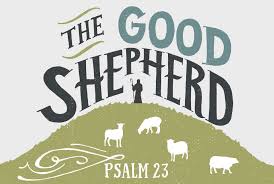
THE GOOD SHEPHERD by IGONO, Abel Raphael. 12/05/2019 THE GOOD SHEPHERD There was a good reason why the illustration of a shepherd with his sheep was used so often in biblical times ... because it was an illustration people could easily identify with in their cultural context.  The illustrations we use are most effective when they are understood easily by the culture to which God has sent us to minister.  Middle eastern cultures understood what shepherding was all about.  It was about feeding the lambs and the sheep, bringing them to good pasture lands and water, grooming and clipping them, delivering new lambs, leading them and teaching them to stay together, going off after the wandering lost ones, and protecting the sheep in the field and in the fold.  We are all under shepherds and Jesus Christ is the Good Shepherd.  We need to emulate what the Good Shepherd does for the sheep. John 21:15-17 When they had finished eating, Jesus said to Simon Peter,...

THE CHILDREN'S EDUCATION IS BEING MARGINALIZED

There’s no doubt that stark social inequalities permeate the economic, educational and social fabric of many societies. Individuals from marginalised groups don’t have access to the same resources as others; they lack the opportunities to be productive members of society; they don’t have access to services such as health and education. In addition, they often have limited influence on decision-making in their communities and are not able to demand accountability from their governments. High levels of social exclusion present policy makers with a complex reality, with socially excluded individuals and groups often facing multiple deprivations and higher levels of poverty that are caused by a wider array of factors  . So, as an increasingly important policy tool for addressing poverty - is there a role for social protection to play? Arguably, social protection programmes have a social mandate and should strive to reach out to the most marginalised. Who is a Mar...